
Example Scenes
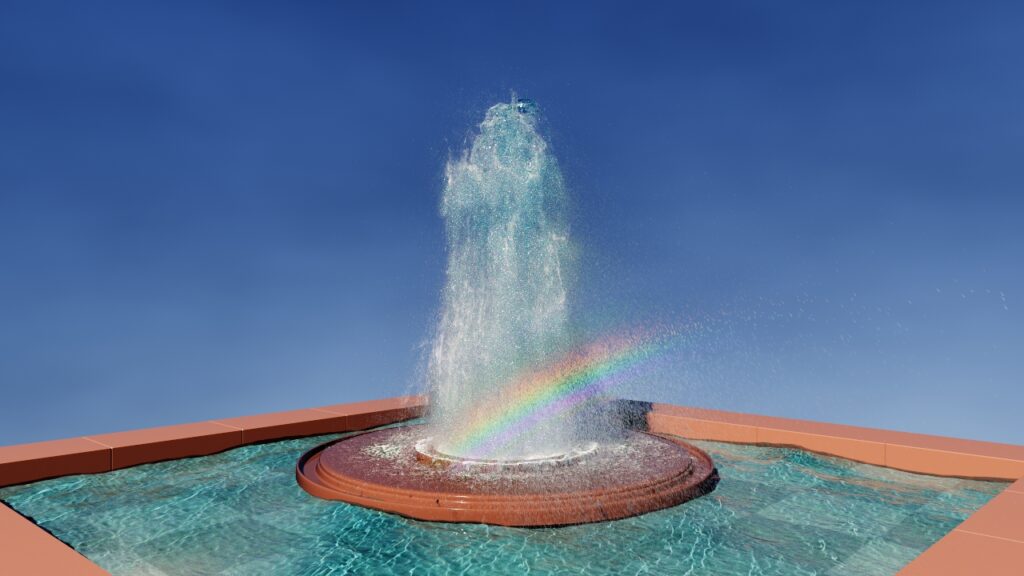
Fountain Rainbow
FountainRainbow[2021+Phoenix].zip
This scene demonstrates the capabilities of spectral rendering. The scene includes a Phoenix FD object for the fountain: a mesh for the water jets and particles for foam, splashes, and water mist. The water mist particles are assigned a Dali MIE material, which allows for physically accurate rainbows. Attention: Dali MIE uses full physically accurate light propagation calculations in spherical particles (Mie theory). These calculations are very slow, even though they are optimized for AVX. Therefore, scenes with rainbows always render slowly. This scene also uses caustics and adaptive rendering.
Fireball
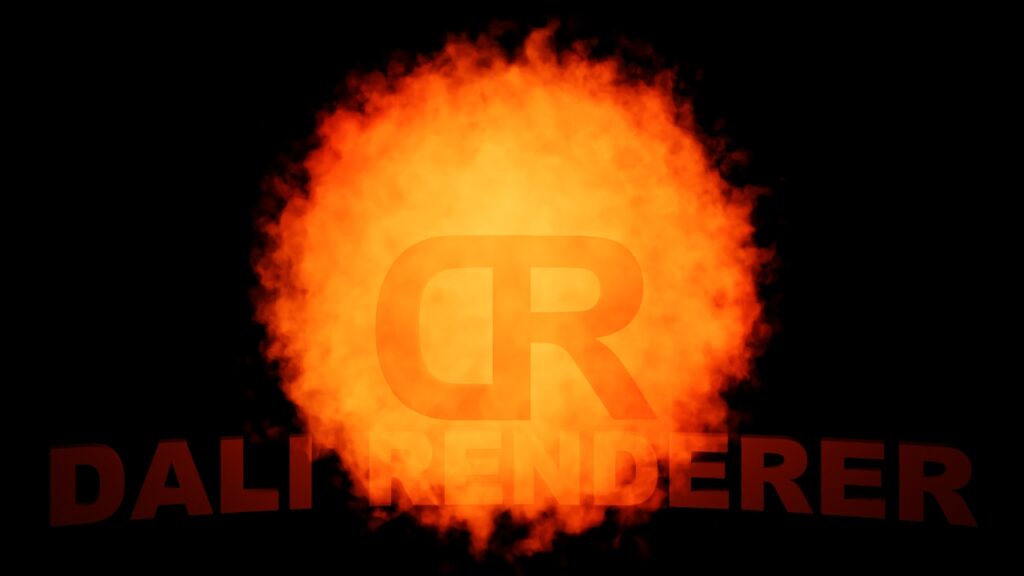
This scene shows the possibility of rendering a procedural emitting volume. 3D noise maps modulated by a spherical gradient are used to set the density and temperature of the fireball. Additionally, the texture coordinates are distorted using a different noise map.
During the rendering, the unbiased Decomposition Spectral Tracking algorithm with emissive extension is used. The fireball itself is converted to an emitter and optimized to reduce sampling noise.
Water Pool
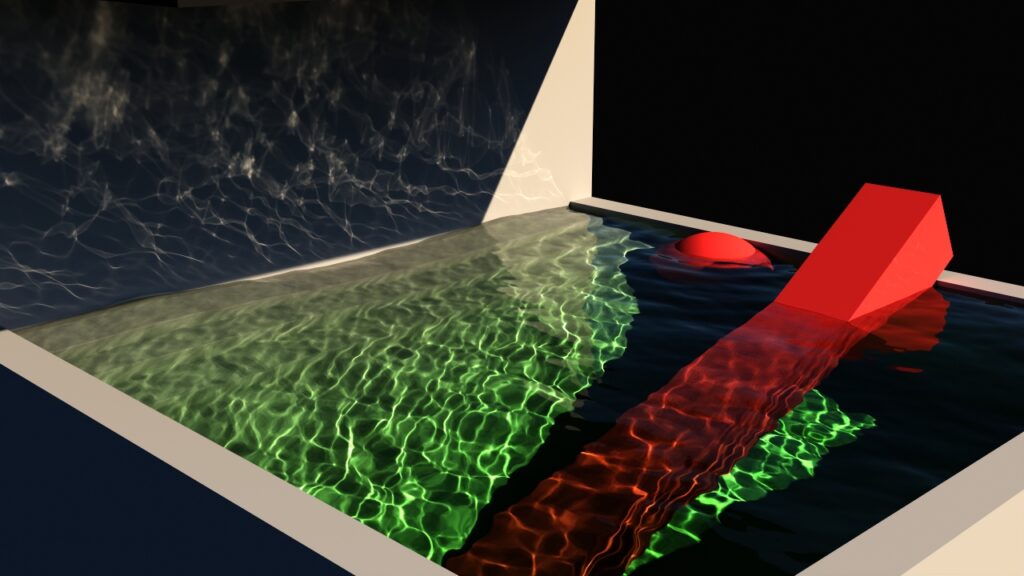
This scene shows the possibility of rendering two types of sunlight caustics. The Dali Sun map is used.
- Direct caustics from water reflection
- Indirect caustics on the pool bottom
Room Glossy Caustics
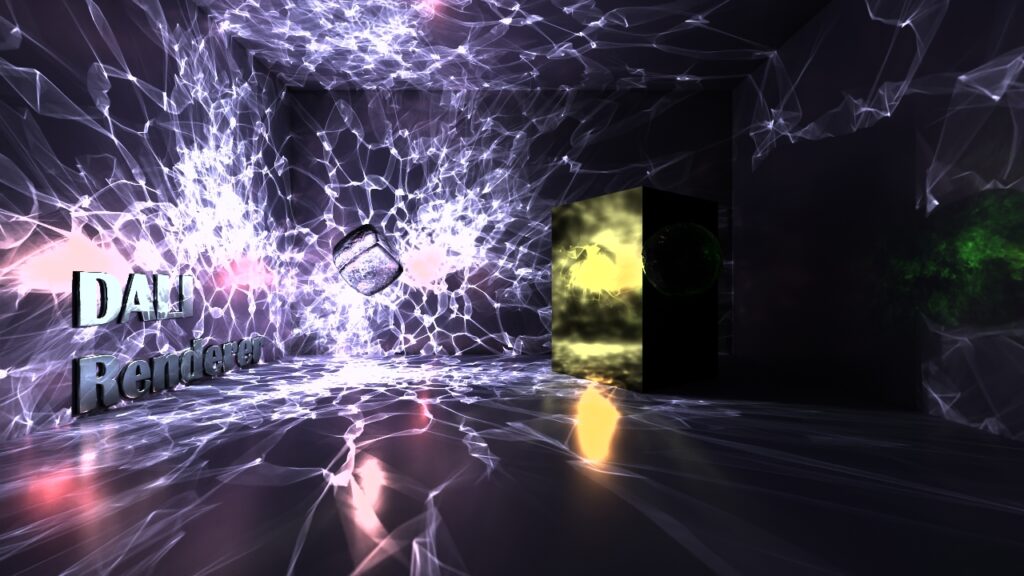
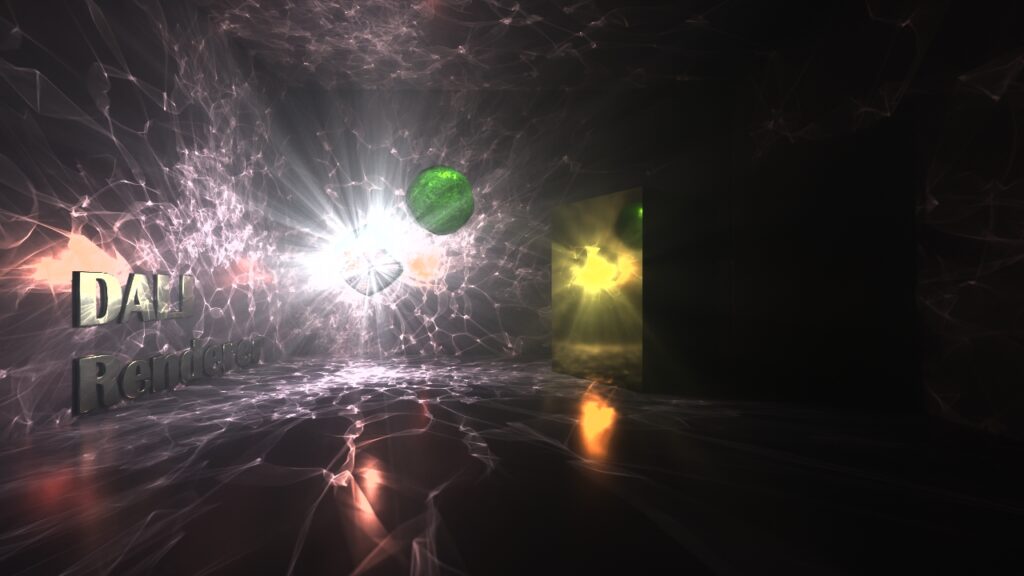
In this scene, the walls and the yellow cube have a medium level of roughness, and this is the toughest case for calculating caustics. Here, the renderer combines several different approaches for rendering caustics into a single low-noise result.
Room Glossy Caustics with Fog
RoomGlossyCausticsFog[2021].zip
In this scene, fog has been added to walls with medium roughness. Caustics scatter on the walls and fog particles, adding some secondary lighting back onto the walls and fog.
Submarine Mines
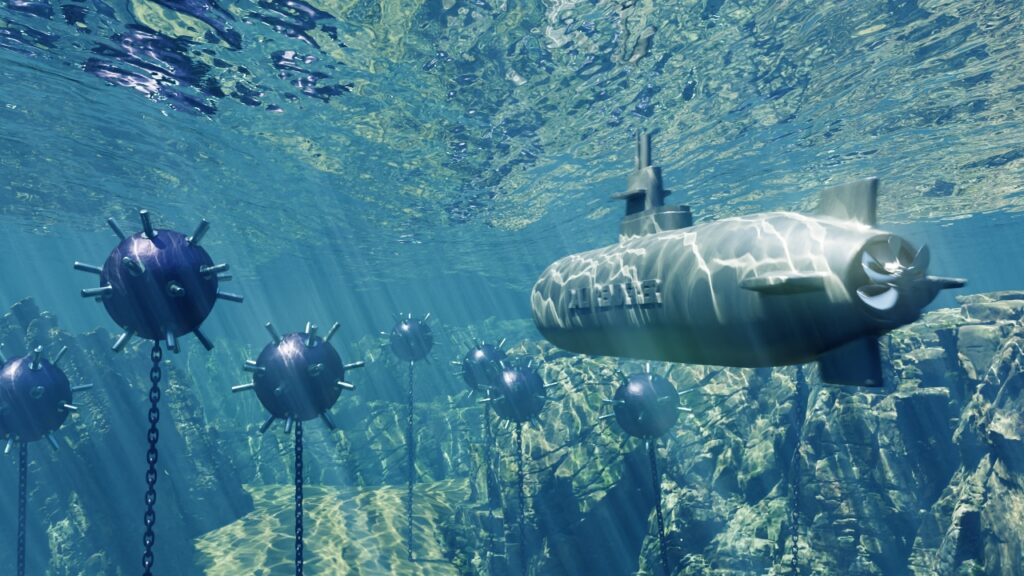
This scene shows the rendering of direct and indirect caustics from perfect and rough surfaces for a camera located in the medium. Motion Blur is used since the scene is animated.
Note: for those frames where the camera is partially submerged in water, you need to set the initial environment detection flag for each pixel — this is in the renderer settings under the scene settings tab.
For frames above water, you can enable fog visibility — it’s a separate object in the scene, hidden by default.
Fog doesn’t interfere with objects underwater, although it partially penetrates the water — this is handled by the Nested Dielectrics mechanism, where the fog has lower priority than water.
The Scene States mechanism is actively used to hide the black bounding volume above the waves.
Horse
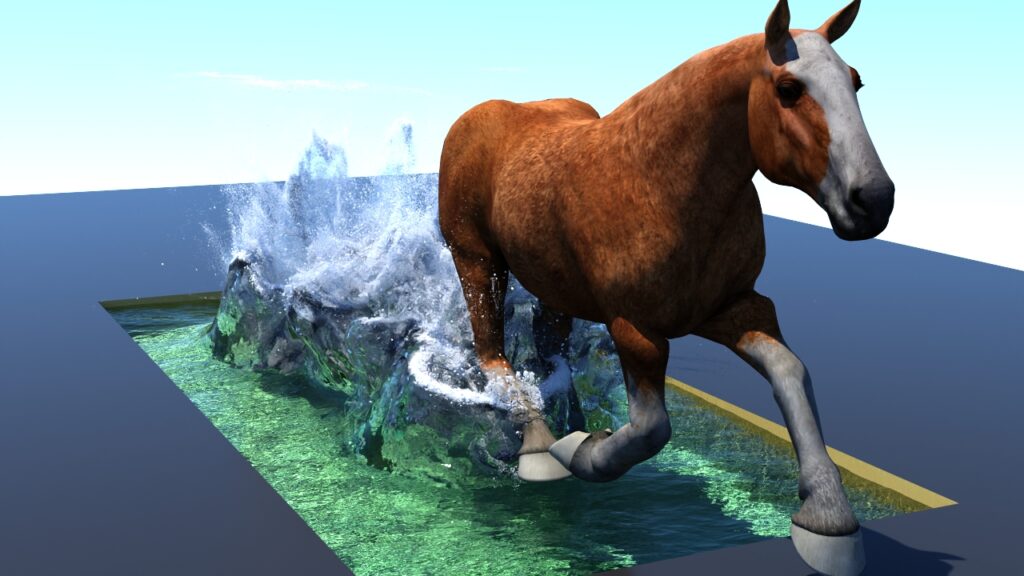
This scene requires the PhoenixFD plugin. The archive includes a single frame from the simulation.
The example uses a mesh and particles from the liquid simulation. The mesh with the water material doesn’t produce direct caustics (there are direct ones too, but they aren’t visible), instead, the particles create splashes and foam. Dali Renderer can render particles as perfect spheres with the assigned material and mapping.
Amulet
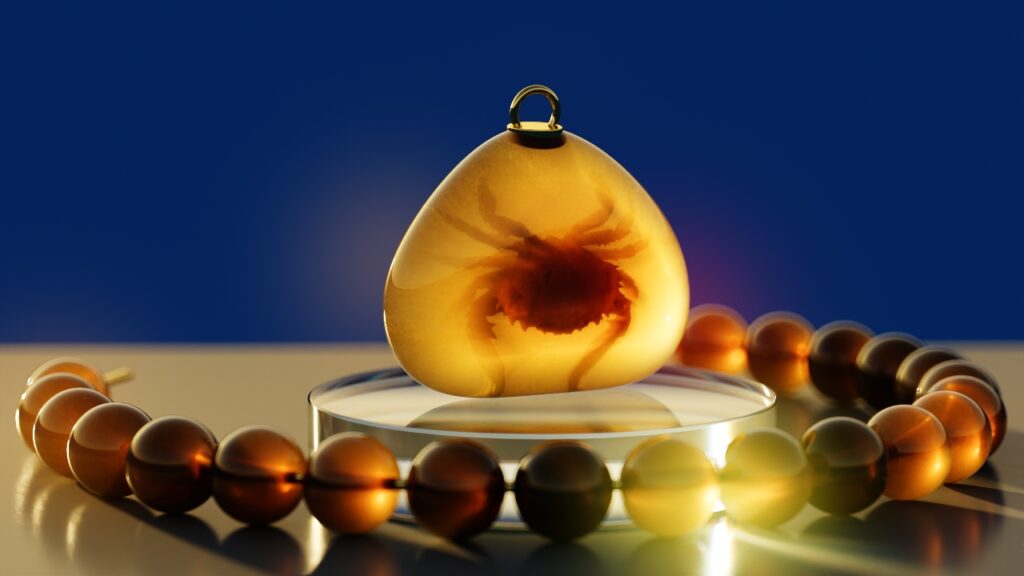
This example uses a composite material — the Dali Physical surface with reflection and refraction, and inside the mesh — Dali Volumetric. You can see volumetric caustics inside the fog.
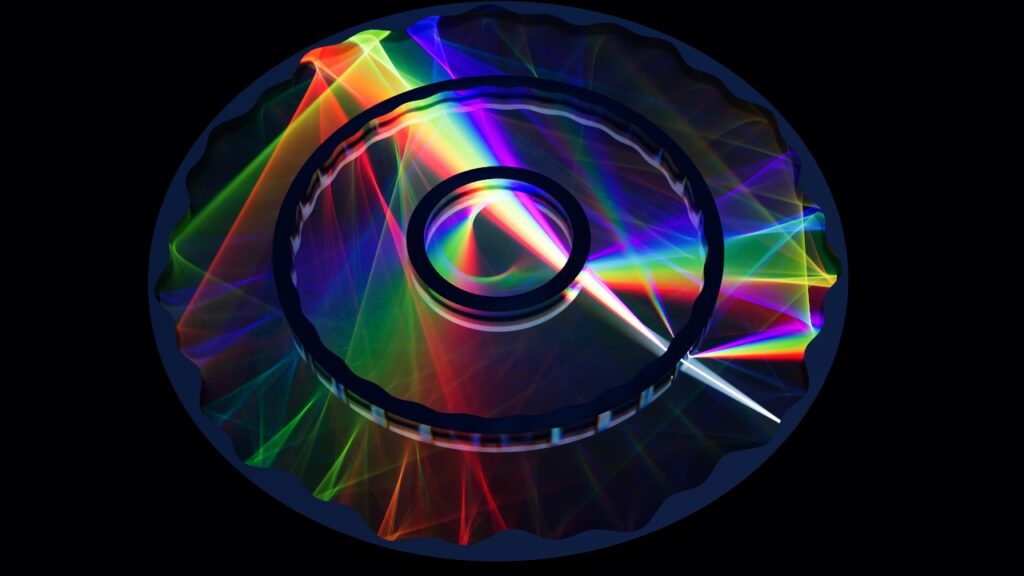
Ring Wave Spectral
This scene shows an example of spectral rendering of direct caustics in fog and indirect ones reflecting off surfaces. A laser with zero beam divergence is used as the light source. A spline is used to set the refractive index (IOR) of the glass material depending on the photon’s frequency — this leads to light dispersion.
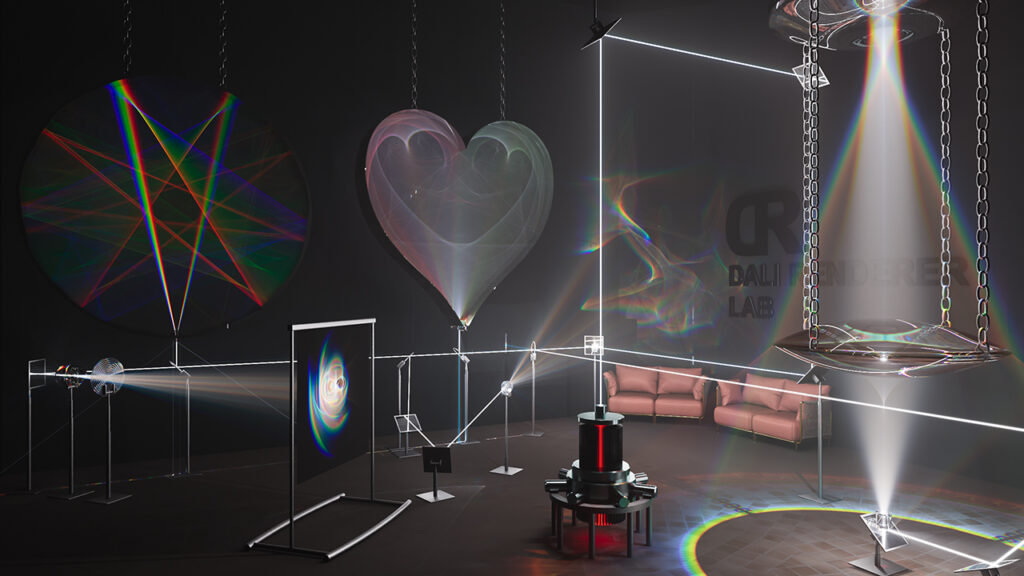
Experiment with Laser
In this scene, a very powerful laser bounces and refracts dozens of times off mirrors and glass, ultimately creating caustics on the walls and in the fog. There’s secondary global illumination from the caustics and from the laser beam itself (you can see the fog glowing around the beam). To optimize noise for semi-transparent surfaces, a priority system is used — letting light through is more efficient than reflecting it for the mirrors that are first in the beam’s path. Additionally, a self-illuminating material is used for the laser radiator.
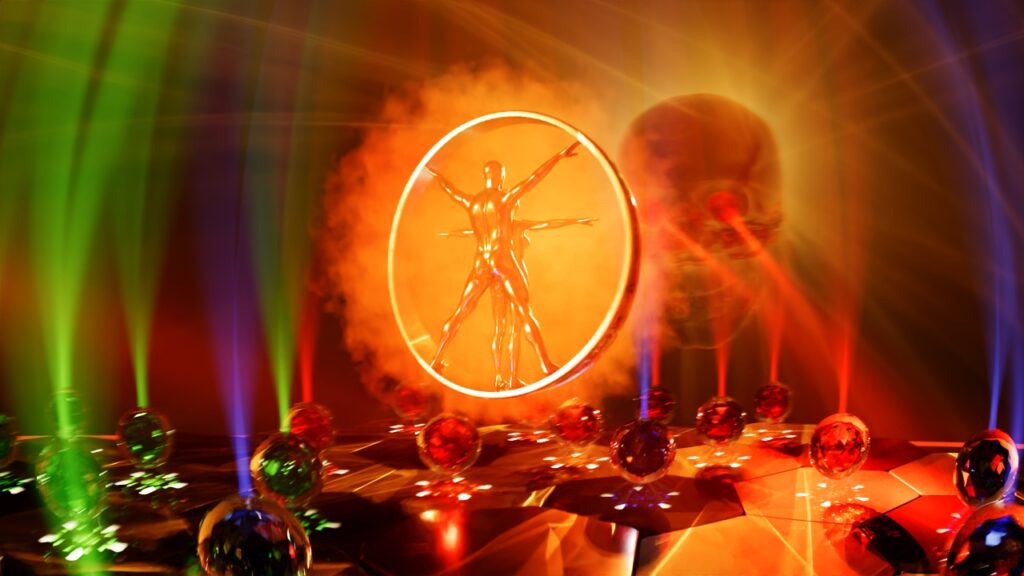
The Game
The animated scene shows the rendering of surface and volumetric caustics. In the center of the scene, there’s an animated procedural emitting volume (fireball), complemented by uniform fog (combining fog densities). Caustics are rendered inside the fireball as well.
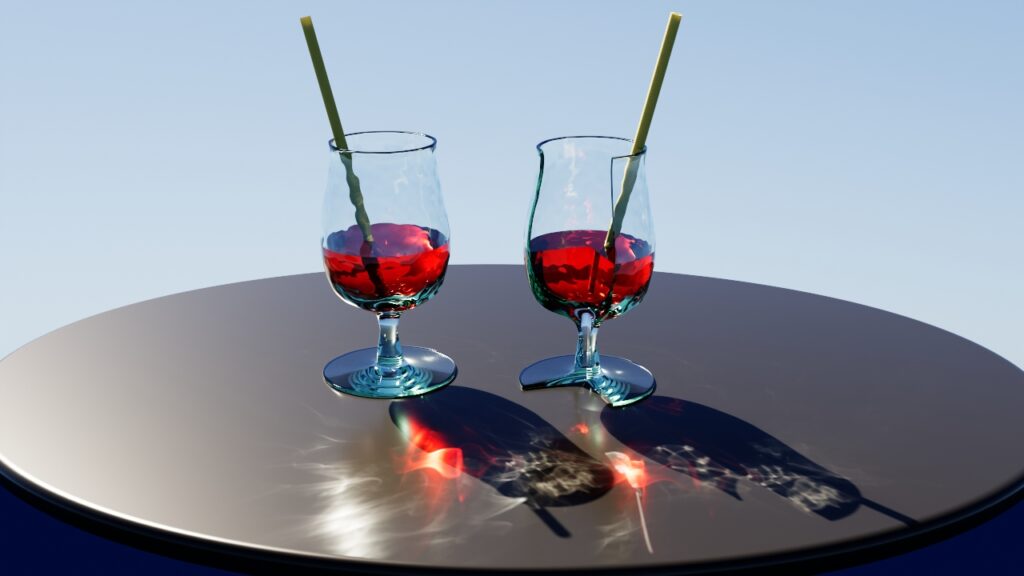
Glasses
The scene shows the work of Nested Dielectrics with three types of caustics: direct caustics, indirect caustics (in reflection or refraction), and long paths through glass. The scene is rendered with adaptation enabled for both the main image and the caustics. The second glass is a reference for the first one, with exactly the same geometry. But it is intersected by a cube with air and higher priority than the glass and liquid. Therefore, this cube ‘cuts out’ part of the glass.